

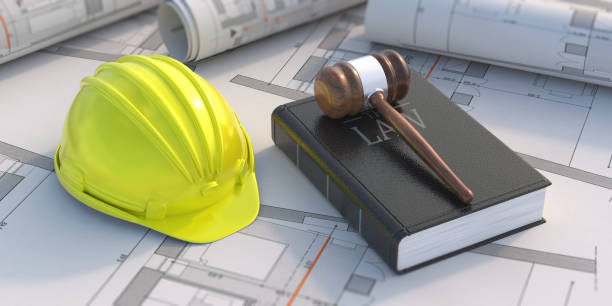
The global construction industry has reached levels of complexity never seen before. Mega-projects across the Middle East, Europe, Africa, and Asia involve multinational contractors, government entities, international suppliers, consultants, lenders, and joint ventures. These projects—ranging from smart cities and industrial plants to highways, rail networks, airports, and energy facilities—carry enormous financial and operational risks.
With this sophistication comes an inevitable rise in disputes: delays, design defects, variations, payment disagreements, site-condition challenges, and contractual misinterpretations. For cross-border projects in particular, litigation in local courts is rarely appropriate due to jurisdictional conflicts, lack of technical specialization, and lengthy procedures.
This is why construction arbitration has become the preferred method for resolving disputes in major and international projects. It offers neutrality, efficiency, confidentiality, and global enforceability.
LEXARB stands at the forefront of this field. With deep legal knowledge, technical expertise, and extensive experience handling complex construction claims, LEXARB provides strategic protection for contractors, owners, developers, and investors engaged in large-scale domestic and international projects.
What Is Construction Arbitration?
Construction arbitration is a specialized dispute-resolution mechanism tailored for engineering and construction conflicts. It is preferred because it deals effectively with:
- technical issues,
- scheduling and delay disputes,
- engineering defects,
- scope variations,
- contractual interpretation challenges,
- multi-jurisdictional issues.
Unlike court litigation, arbitration allows parties to choose experts familiar with construction practices, FIDIC contracts, CPM delay analysis, and international project dynamics.
Why Construction Arbitration Is Essential for Major and Cross-Border Projects
-
Technical Complexity Requires Expert Decision Makers
Construction disputes often involve:
- detailed engineering calculations,
- design coordination issues,
- geotechnical findings,
- testing and quality results,
- complex project management records.
Arbitration panels typically include experts in both law and engineering, enabling more accurate assessments than traditional courts.
-
Large-Scale Projects Cannot Afford Delays
Disputes that drag on for years can cripple multimillion-dollar projects. Delays affect:
- financing arrangements,
- equipment leases,
- subcontractor engagement,
- public-sector deadlines,
- commercial launch plans.
Arbitration is designed to be faster and more predictable.
-
Cross-Border Construction Contracts Require Neutral Forums
International projects include parties from:
- different countries,
- different languages,
- different legal traditions.
Arbitration ensures a neutral environment where no party benefits from “home-court advantage.”
-
Most Major Construction Contracts Already Require Arbitration
FIDIC, EPC, Design & Build, PPP, and BOT contracts typically include clauses referring disputes to:
- ICC
- LCIA
- UNCITRAL
- SCCA
- CRCICA
- SIAC
Thus, arbitration is embedded in the commercial frameworks used across major projects worldwide.
-
Arbitration Awards Are Enforceable Worldwide
Under the New York Convention, awards can be enforced in more than 160 countries.
This is crucial when:
- owners or contractors are foreign,
- assets are held outside the project country,
- financing is international.
Court judgments do not enjoy this level of global enforceability.
Common Disputes Addressed Through Construction Arbitration
-
Delay and Time-Extension Claims
These disputes involve:
- late approvals,
- design changes,
- force majeure,
- contractor performance issues,
- supply-chain failures,
- government-caused delays.
-
Variations and Scope Adjustments
Examples:
- additional works,
- material substitutions,
- design modifications,
- rework caused by unclear specifications,
- site-condition changes.
-
Payment and Financial Claims
Including:
- valuation disputes,
- remeasurement issues,
- interim payment disputes,
- escalation of material costs,
- subcontractor claims.
-
Defects, Engineering Errors, and Quality Disputes
Such as:
- structural failures,
- design miscalculations,
- non-compliance with specifications,
- faulty installation or workmanship.
-
Suspension and Termination Conflicts
One of the most serious categories:
- wrongful termination,
- suspension of works,
- enforcement of performance bonds,
- demobilization costs.
How Construction Arbitration Works
-
Selecting the Tribunal
One of the key strengths of arbitration is the ability to choose qualified experts:
- one arbitrator with legal expertise,
- one arbitrator with engineering background,
- a chair with extensive experience in construction arbitration.
-
Submission of Claims and Technical Evidence
Arbitration relies heavily on documentary and technical evidence:
- contracts and correspondence,
- CPM delay analyses,
- expert reports,
- inspection and testing data,
- meeting minutes,
- drawings and specifications.
LEXARB specializes in preparing strong submissions supported by both legal arguments and engineering evidence.
-
Hearings and Cross-Examination
Hearings involve:
- examination of experts,
- cross-examination of witnesses,
- review of delay models,
- testing of contractual interpretations.
LEXARB’s advocacy skills help present complex arguments clearly and persuasively.
-
The Final Award
Arbitrators issue a binding and enforceable award that includes:
- liability findings,
- compensation calculations,
- declarations of contractual rights,
- interest and cost allocations.
Why LEXARB Leads in Construction Arbitration
LEXARB’s strength comes from combining engineering knowledge with legal precision.
-
Deep Expertise in FIDIC, EPC, and Large Infrastructure Contracts
LEXARB’s lawyers understand:
- risk allocation mechanisms,
- change management procedures,
- extension-of-time requirements,
- engineer and consultant responsibilities,
- dispute-adjudication boards (DAB/DAAB).
-
Strong Claim Preparation and Technical Integration
LEXARB collaborates with:
- delay analysts,
- cost engineers,
- geotechnical experts,
- QA/QC specialists.
This allows the firm to prepare:
- delay claims,
- variation claims,
- disruption claims,
- termination and compensation claims.
Each fully supported with:
- technical evidence,
- financial calculations,
- contractual analysis.
-
Skilled Negotiation and Early Dispute Resolution
Many construction disputes are resolved without arbitration when handled properly.
LEXARB excels at:
- structured negotiation,
- mediation,
- technical settlement sessions,
- drafting settlement agreements.
-
Experienced Representation in International Arbitration Centers
LEXARB represents clients under:
- ICC
- LCIA
- UNCITRAL
- CRCICA
- SCCA
With strong written submissions, strategic case management, and persuasive advocacy.
-
Focus on Project Continuity
LEXARB’s primary objective is not only winning arbitration but ensuring:
- minimal project disruption,
- protection from penalties,
- preservation of commercial relationships,
- safeguarding cashflow and guarantees.
Case Study: LEXARB Secures a Major Victory for an International Contractor
Project:
A cross-border industrial facility involving contractors from multiple countries.
Issue:
The owner delayed essential design approvals for months, causing schedule overruns.
Owner’s Position:
- No extension of time
- Heavy delay penalties
- Rejection of compensation claims
LEXARB’s Actions:
- Conducted a forensic CPM delay analysis.
- Demonstrated the owner-caused delay clearly.
- Filed a strong arbitration claim supported by engineering evidence.
- Negotiated a settlement before the final hearings.
Outcome:
- Penalties withdrawn
- Extension of time granted
- Financial compensation awarded
- Work continued without disruption
Practical Guidance for Avoiding Construction Disputes
- Ensure contracts are drafted with clear risk allocation.
- Establish proper documentation protocols.
- Conduct regular schedule reviews.
- Validate all variations through formal channels.
- Seek early legal and technical advice from LEXARB.
- Do not postpone claims management until issues escalate.
Conclusion
Construction arbitration is indispensable for today’s international and large-scale projects. It offers neutrality, efficiency, and technical competence—qualities essential for resolving the complex disputes that arise in major construction operations.
LEXARB provides a unique advantage through its multidisciplinary approach:
- legal expertise,
- engineering analysis,
- global arbitration experience,
- proven negotiation skills.
For companies engaged in major or cross-border construction projects, LEXARB is a trusted partner in safeguarding contractual rights and securing favorable dispute outcomes.
If your organization is facing a construction dispute or requires strategic protection for cross-border contracts, contact LEXARB today for a confidential consultation with our construction arbitration specialists.